
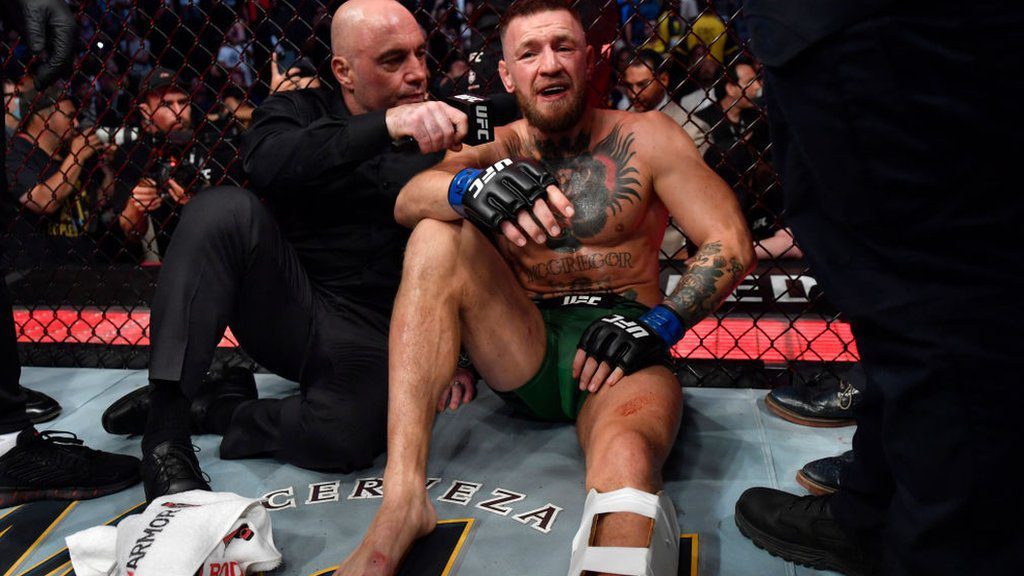
Returning to the UFC after a multi-year layoff is one of the hardest tasks in combat sports. Fighters lose timing, durability, and momentum while the sport continues evolving without them. That is now the challenge facing Conor McGregor ahead of his UFC 329 rematch with Max Holloway.
McGregor enters the fight after a five-year absence from competition following the broken tibia and fibula injury he suffered against Dustin Poirier. UFC history suggests those kinds of layoffs usually end badly, even for former champions. Let’s have a look at the data.
Long layoffs usually do not end well at the highest level of the sport
The UFC has seen several high-profile fighters return after extended absences only to immediately struggle against elite competition.
Cain Velasquez returned in 2019 after 952 days away from the Octagon, roughly 2.6 years, following years of injuries and surgeries. His comeback lasted only 26 seconds before Francis Ngannou knocked him out in brutal fashion.
Ronda Rousey also failed to regain her old form after time away. Following a 411-day layoff, roughly 1.1 years, after her loss to Holly Holm, Rousey returned in 2016 against Amanda Nunes and was overwhelmed in just 48 seconds.
Dominick Cruz remains one of the rare fighters who initially managed to return successfully after a long absence. Cruz came back in 2016 after more than 1,100 days away, roughly 3.1 years, and defeated T.J. Dillashaw to reclaim the bantamweight title.
However, injuries continued to follow him throughout the later stages of his career, and he had a second layoff, this time of 1,225 days, and on his comeback in 2020, he suffered a knockout loss to Henry Cejudo.
McGregor’s situation may be even more difficult because his layoff is the longest of any fighter on this list. By the time UFC 329 takes place, he will have spent more than 1,827 days away from competition, roughly five full years without an MMA fight.
Leg breaks make it even worse
The history of fighters returning from devastating leg injuries is even more concerning.
Anderson Silva suffered one of the most gruesome leg breaks in UFC history against Chris Weidman. Silva returned 399 days later against Nick Diaz and initially won the fight, although the result was later overturned to a No Contest following a failed drug test. Still, he never regained his form after that win, with only a single decision win of Derek Brunson in his last six UFC fights.
Weidman later experienced the same injury himself years later. After spending 847 days recovering from his broken leg, he returned against Brad Tavares and lost by unanimous decision. Many analysts noted that Weidman no longer looked physically comfortable throwing or absorbing kicks after the injury.
That is one of the major concerns surrounding McGregor entering UFC 329. Holloway is known for his pace, pressure, and kicking volume. Questions remain about how McGregor’s repaired leg will respond under sustained pressure after such a long absence.
| Fighter | Length of Layoff | Comeback Opponent | Result of Comeback Fight | Leg Break Injury? |
| Georges St-Pierre | 1,449 Days (~4 Years) | Michael Bisping | Won via 3rd-Round Submission | |
| Jon Jones | 1,120 Days (~3 Years) | Ciryl Gane | Won via 1st-Round Submission | |
| Chris Weidman | 847 Days (~2.3 Years) | Brad Tavares | Lost via Unanimous Decision | ✔ |
| Dominick Cruz | 1,148 Days (~3.1 Years) | T.J. Dillashaw * / | Won via split decision | |
| Dominick Cruz | 1,225 days (~3.3 Years) | Henry Cejudo | Lost via TKO | |
| Cain Velasquez | 952 Days (~2.6 Years) | Francis Ngannou | Lost via 26-Second KO | |
| Anderson Silva | 399 Days (~1.1 Years) | Nick Diaz | Won / Overturned to No Contest | ✔ |
| Ronda Rousey | 411 Days (~1.1 Years) | Amanda Nunes | Lost via 48-Second TKO | |
| Conor McGregor | ~1,827 Days (~5 Years) | Max Holloway | TBD | ✔ |
Only the true greats managed to buck the trend
Despite the historical trend, there are a few examples of legendary fighters successfully overcoming long layoffs.
Georges St-Pierre returned after 1,449 days away and moved up in weight to defeat Michael Bisping for the middleweight title. The victory cemented his status as one of the greatest fighters in MMA history.
Jon Jones also erased concerns about ring rust after a 1,120-day layoff. Jones moved to heavyweight and submitted Ciryl Gane in the first round to become UFC heavyweight champion.
And to that I would add that neither Jones, nor GSP were coming back off a major injury, and neither were coming off a devastating loss either.
McGregor’s supporters may believe his power still gives him a realistic path to victory. Several analysts and fighters have pointed to his ability to finish opponents early, especially if the added size at welterweight benefits his striking. If he can land his notorious left hand in the first two rounds, he has a good chance to win the fight.
His manager promises McGregor will remain active, even after this fight, but analysts like Matt Brown think a loss will be the ultimate end for his career as a competitive fighter at the highest level.
Why Max Holloway remains the favorite
While McGregor has had years to recover, but he also spent those years partying, promoting whiskey and energy drinks, consuming dr*gs and alcohol, and getting into trouble.
Holloway, meanwhile has remained one of the UFC’s most active elite fighters. He has continued facing top competition and enters UFC 329 with far more recent cage experience.
Analysts believe Holloway’s pressure, pace, and durability could become major problems if McGregor cannot secure an early finish. Holloway’s kicking game has also become a major talking point because of McGregor’s history with leg injuries.
UFC sportsbooks currently list Holloway as a sizeable betting favorite, making McGregor one of the largest underdogs of his UFC career, at +283 odds.